
Reinvention, Stewardship, and the Quiet Advantage of Midlife
There is a persistent myth in modern culture that transformation requires destruction. We are told that to build a new life, one must burn down the old one, that reinvention demands a dramatic severing of the past.
It’s a seductive idea. It sounds heroic. It fits neatly into the language of cinema and social media.
It is also wrong.
The deeper truth, confirmed by decades of research in adult development, is far more encouraging. The men who successfully reinvent themselves in midlife rarely destroy their former lives. Instead, they refine them. They reorganize them. They put them to better use.
The past becomes less a burden than a set of tools.
The second half of life is not a demolition. It is an ascent of a different kind.
The Long Preparation
The Swiss psychiatrist Carl Jung once observed: “Life really begins at forty. Up until then you are just doing research.”
Jung didn’t mean that earlier decades lack meaning. Quite the opposite. The early years of a man’s life are filled with building, careers, reputations, families, and ambitions.
But they’re also years of experimentation. One learns what one values by pursuing what one does not.
By midlife, a man has accumulated something rare: pattern recognition. He begins to see the difference between what impresses people and what actually endures. He stops confusing velocity with direction. He starts to understand that most urgency is manufactured, and most noise is optional.
Benjamin Franklin expressed a similar sentiment in his own plainspoken way: “Experience keeps a dear school, but fools will learn in no other.”
By the time a man reaches his forties and fifties, he has already paid the tuition.
The Quiet Reassessment
Psychologists studying adult development have long observed a period known as the midlife review. Daniel Levinson, who conducted extensive studies on adult life stages, found that many men enter a phase of reflection somewhere in their early forties.
This is not the “midlife crisis” of popular mythology.
It is something quieter.
A man begins asking questions that once seemed distant: What work actually matters to me? Which obligations still deserve my time? What kind of life would feel worthy when viewed in retrospect?
These questions rarely arrive with fireworks. They arrive during long drives, late evenings, and moments of unexpected clarity.
It’s less a crisis, more a course correction.
Clearing the Ground
One of the most consistent patterns researchers observe is that successful reinvention begins with subtraction.
Before a man builds something new, he begins quietly removing what no longer belongs. Certain commitments are allowed to fade. Some habits are retired. A few relationships drift naturally into the past.
This process is not bitterness or rejection. It is discernment.
Henry David Thoreau once wrote: “The price of anything is the amount of life you exchange for it.”
With time, a man becomes more selective about the currency of his hours.
The Power of Small Experiments
Another misconception about reinvention is that it must happen overnight.
The most successful life changes begin quietly. A man begins writing in the evenings. He mentors younger colleagues. He explores a field that once interested him but was set aside during earlier responsibilities.
Modern life-design research, including the work of Bill Burnett and Dave Evans, suggests that meaningful change often begins with small, reversible experiments rather than dramatic leaps.
This approach replaces fear with curiosity.
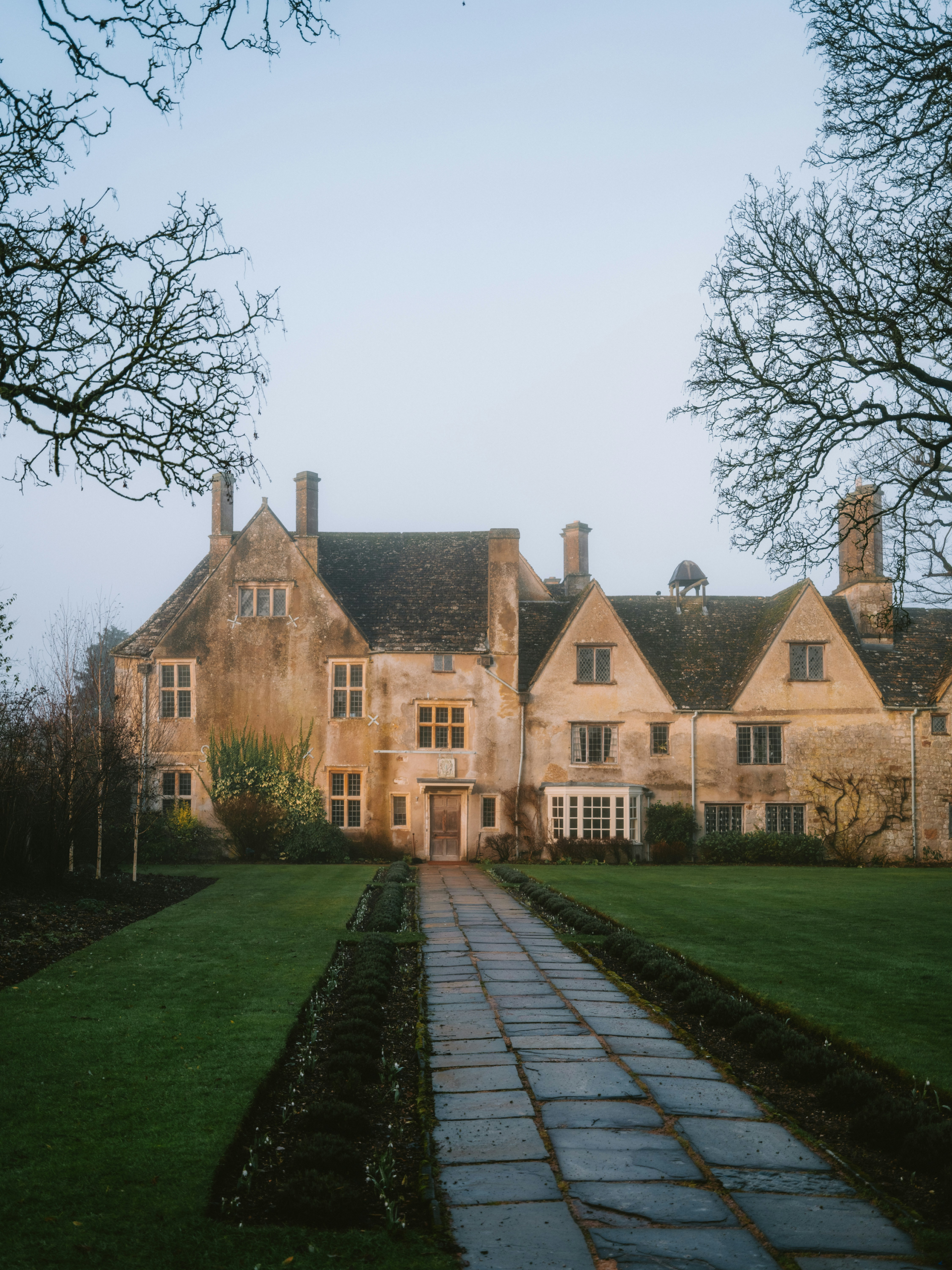
One doesn’t need to abandon the entire estate to renovate a wing.
The Real Advantage of Age
Perhaps the most surprising discovery in the psychology of reinvention is that success later in life depends less on intelligence or discipline than on something subtler: psychological flexibility.
This concept is central to the therapeutic framework known as Acceptance and Commitment Therapy, developed by psychologist Steven C. Hayes.
Psychological flexibility is the ability to adapt one’s thinking when circumstances change, to update beliefs without feeling that one’s identity is under threat.
In practical terms, it means asking a simple but powerful question: What can I build with this? Rigid men defend the identity they constructed in their youth. Flexible men evolve it.
The Shift Toward Stewardship
Another profound change occurs in midlife: the definition of success begins to evolve.
In earlier decades, achievement often revolves around accumulation. Titles, income, recognition, accomplishment.
Later, the emphasis shifts toward generativity, a term coined by the developmental psychologist Erik Erikson. Generativity describes the desire to contribute beyond oneself, to mentor, create, guide, and leave something meaningful behind.
Andrew Carnegie captured the spirit of this transition with characteristic clarity: “The man who dies rich dies disgraced.”
Carnegie understood that the ultimate measure of a life lies not in what one acquires, but in what one cultivates for others.
This idea resonates strongly with older traditions of stewardship, particularly those found in aristocratic cultures where land, craft, and institutions were not merely owned but tended.
A man eventually moves from building his estate to curating it.
The Climb Resumes

When viewed this way, midlife is not a decline. It is the beginning of a different climb.
Earlier years reward speed, ambition, and relentless forward motion. Later years reward discernment.
A younger man pursues opportunity wherever it appears. An older man recognizes which opportunities deserve pursuit.
Seneca once wrote: “It is not that we have a short time to live, but that we waste a lot of it.” Age clarifies this truth. Time becomes less about urgency and more about intention.
A Guide for the Modern Gentleman
For those standing at the threshold of midlife, or already well into it, the path forward need not involve dramatic upheaval. Begin with an honest inventory: which commitments, relationships, and pursuits still align with your values? Then subtract before you add, since space is required
for new things to emerge. Explore new interests quietly, without announcing a grand reinvention. Preserve what remains valuable — your past is not an obstacle, it is a foundation. And shift, gradually, toward stewardship: mentor, teach, build institutions, and cultivate things that will outlast you.
The Estate of a Life
The modern world often celebrates youth as the peak of possibility.
History suggests otherwise.
Many of humanity’s most influential contributions were produced by men well past the age when society assumes ambition fades.
Wisdom is not a sudden gift. It is the accumulation of errors properly understood.
The second half of life presents a particular opportunity, not to abandon the man you once were, but to assemble the lessons of that life into something deliberate.
A well-lived life resembles an old estate. It grows in layers. Gardens are planted, expanded, reshaped. Buildings are added, restored, and improved. Over time, the grounds acquire a character that could never have been designed all at once.
The aim is not to erase the past.
It is to cultivate it.
And for the man willing to do so, the years ahead may yet prove the most interesting ones of all.

The Unofficial Ambassador for the State of Texas