Hold Your Line
The temptation, when the boat begins to heel, is to do too much.
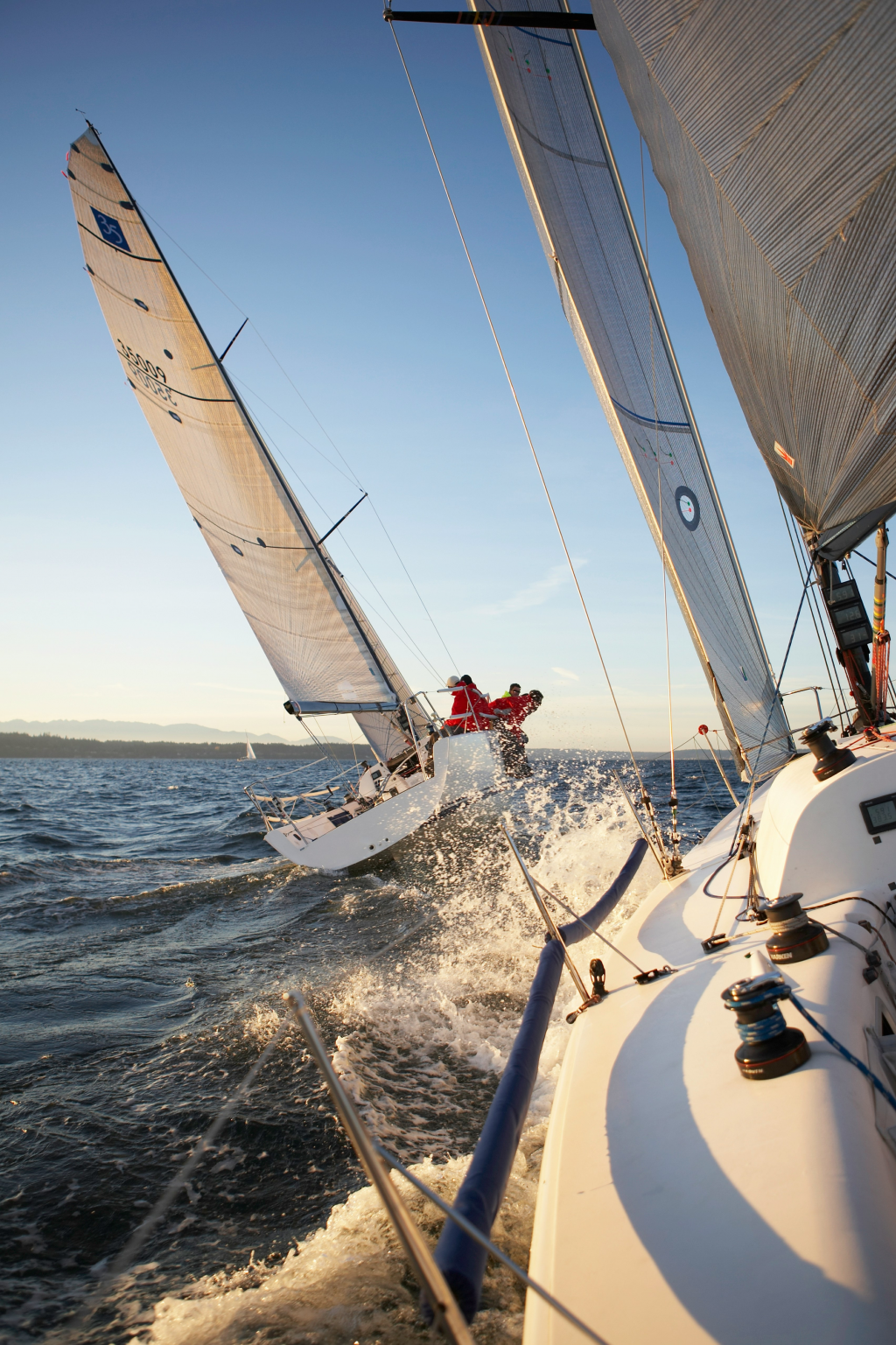
A gust comes across the water. The sail fills harder. The rail dips. The body feels the angle before the mind has named it. For the inexperienced, that first lean can feel like failure. Something must be wrong. Something must be corrected at once. The hands tighten. The eyes widen. The helm moves too sharply. The boat, which a moment earlier was simply responding to pressure, is suddenly being disturbed by panic.
The water offers little patience for panic.
It does not reward the man who mistakes movement for danger. It does not flatter the man who believes every shift in pressure requires a new decision. What it does teach however, with great efficiency, is that composure is not stillness. It is steadiness under force.
A boat under sail is never entirely at rest. Even in fair weather, she lifts, rolls, leans, surges, settles. The wind presses against canvas. The hull answers through the water. The rudder takes instruction from the hand, and every unnecessary correction has a consequence.
At first, the novice believes good seamanship means constant action. He trims, eases, turns, checks, adjusts, and corrects. He confuses attention with interference. He thinks a steady hand must always be doing something.
Then the water begins its education.
You learn that the boat can heel without being in trouble. You learn that pressure can build without demanding alarm. You learn that a line chosen with care must sometimes be held through discomfort before it proves itself wise.
This is not stubbornness. Stubbornness refuses to see what is happening. Discipline sees clearly and refuses to be ruled by nerves.
That distinction matters.
The sailor who holds his line is not ignoring the wind. He has already read it. He has felt the shift, checked the sail, and made his judgment. Once that judgment has been made, he gives it time to work. He does not surrender the helm to every anxious impulse. He allows the boat to move through the moment rather than trying to erase the moment altogether.
A life can be lost in unnecessary corrections.
A man starts toward a meaningful ambition, then the first discomfort arrives. The work becomes slower than expected. The approval does not come. The money tightens. The audience is quiet. The body grows tired. The old doubts begin their familiar work.
So he changes course.
Then he changes again.
He calls each change wisdom. He calls each retreat refinement. He tells himself he is being flexible, responsive, and realistic. In truth, he may simply be refusing to let pressure pass through him without obeying it.
The modern world encourages this kind of nervous seamanship. It rewards reaction. It confuses motion with progress and revision with intelligence. Every gust becomes a signal. Every discomfort becomes evidence. Every delay becomes a reason to abandon the course.
The water offers an older instruction.
Not every gust is a message.
Some gusts are only gusts.
They arrive, press hard, test the rigging, and pass. A boat that has been properly set can take more pressure than the frightened man aboard believes. So can a life built with care. So can a reputation. So can a vocation. So can a household, a business, a body, a faith.
The question is not whether pressure will come. I can promise with 100% certainty it will come. The real question is whether the man at the helm can tell the difference between a warning and a test.
Warnings require action. Tests require composure.
The skill lies in knowing which is which.
That knowledge does not come from theory alone. It comes from time under canvas. It comes from having been frightened before and discovering that fear is not always prophecy. It comes from making mistakes in both directions: holding on too long when adjustment was required, and changing too quickly when patience would have carried the day. Quite simply, it comes from experience.
A good sailor is not passive. He is not romantic about danger. He does not admire hardship for its own sake. He reefs when the sail is carrying too much. He changes course when the weather demands respect. He knows that pride has sunk more than one boat.
He also knows that fear has spoiled more than one passage.
To hold your line is to remain honest without becoming obedient to every emotion. It is the discipline of keeping enough pressure in the sail, enough hand on the helm, enough humility in the mind, and enough courage in the chest.
The line itself must be chosen honestly. No amount of composure can redeem a foolish heading. A man must know where he is going, why he is going there, and what kind of weather he is willing to endure in order to arrive. Without that, holding the line becomes theater. The posture of strength without the substance of judgment.
But once the line is chosen well, it deserves loyalty.
That loyalty is increasingly rare. It is easier to chase novelty than to develop depth. Easier to announce a new direction than to endure the quiet labor of the current one. Easier to call oneself misunderstood than to become excellent. Easier to pivot than to persist.
Water has no interest in announcements.
It knows the truth by movement.
A boat either makes way or she does not. The wake tells the story. The heading tells the story. The condition of the sails tells the story. The man at the helm may invent explanations, but the water records conduct.
So does life.
You become what you repeatedly do under pressure. Not what you claim in calm weather. Not what you imagine yourself to be in private. Not what you intend when everything is easy. Character is revealed when the rail dips and the body wants relief.
The finest men I have known were not untouched by fear. They simply did not allow fear to become captain. They could feel uncertainty and still speak calmly. They could face delays and still work. They could receive criticism and still remain upright. They could endure an uncomfortable season without treating discomfort as a verdict.
That is a form of command, though not over the wind.
It is command over the self.
The water begins with humility. It teaches a man to look outward, read the sky, and to respect the unseen forces moving around him. Then it teaches adaptation, the necessary art of working with what cannot be controlled. Eventually, it asks for something harder: steadiness after adjustment.
The wind has shifted. The sail has been trimmed. Your course has been considered. Now hold.
Hold without theatrics. Hold without bitterness. Hold without announcing the strain to everyone on shore. Hold with the quiet (or perhaps stoic) dignity of a man who understands that pressure is not always opposition. Sometimes pressure is the very thing that moves the vessel forward.
That may be the most easily forgotten lesson.
Without wind, the boat does not sail.
The same force that unsettles her also carries her. The same pressure that makes her heel gives her speed. The same invisible hand that tests the rigging fills the canvas. A sailor who only wants comfort will spend his life in circles, close to shore, protected from the very conditions that might have taken him somewhere.
I’m not saying that storms do not need to be sought. Danger does not become noble simply because it is dramatic. But a man should understand that a life without pressure rarely produces much worth admiring.
The line must be held through the right kind of difficulty.
Through the slow season. Through the unglamorous middle. Through the private doubts that arrive after the public enthusiasm fades. Through the intrusive thoughts that can rob you of sleep at 2:00 AM. Through the long stretch where no one is applauding and nothing appears to be happening, except the silent accumulation of strength.
That is where the passage is made.
Not in the announcement. Not in the first clean departure from harbor. Not in the Instagram worthy photograph taken under perfect light. The passage is made in the hours when the horizon stays stubbornly distant and the only evidence of progress is the wake behind you.
A man should look back at that wake from time to time.
Not to live in it. Not even to admire himself. Simply to remember that forward motion is often easier to see after it has already happened. The water behind the stern tells him he has not been still. The line held has carried him farther than the anxious mind was able to measure.
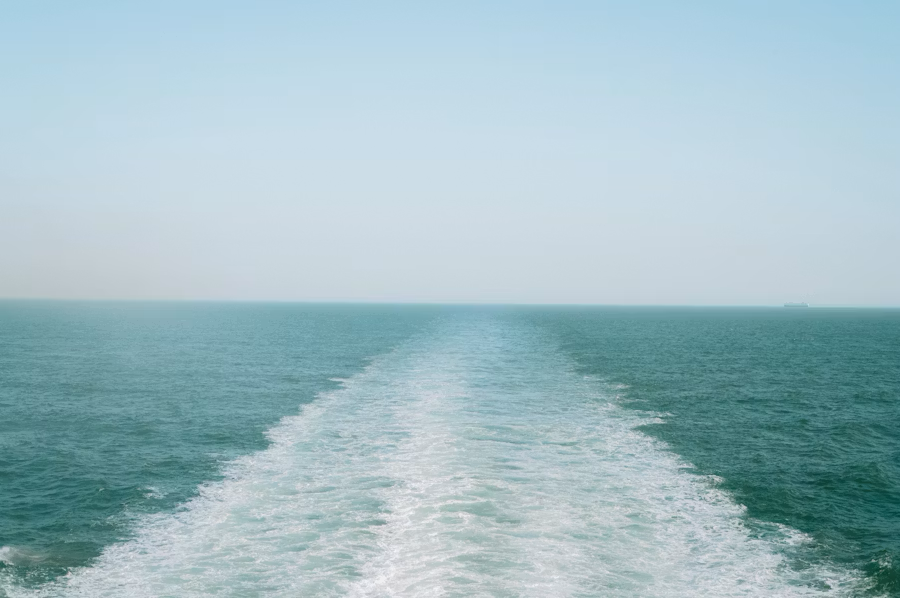
Then he looks forward again.
The wind is still not his to command. The water is still not his to own. The horizon is still farther away than pride would prefer.
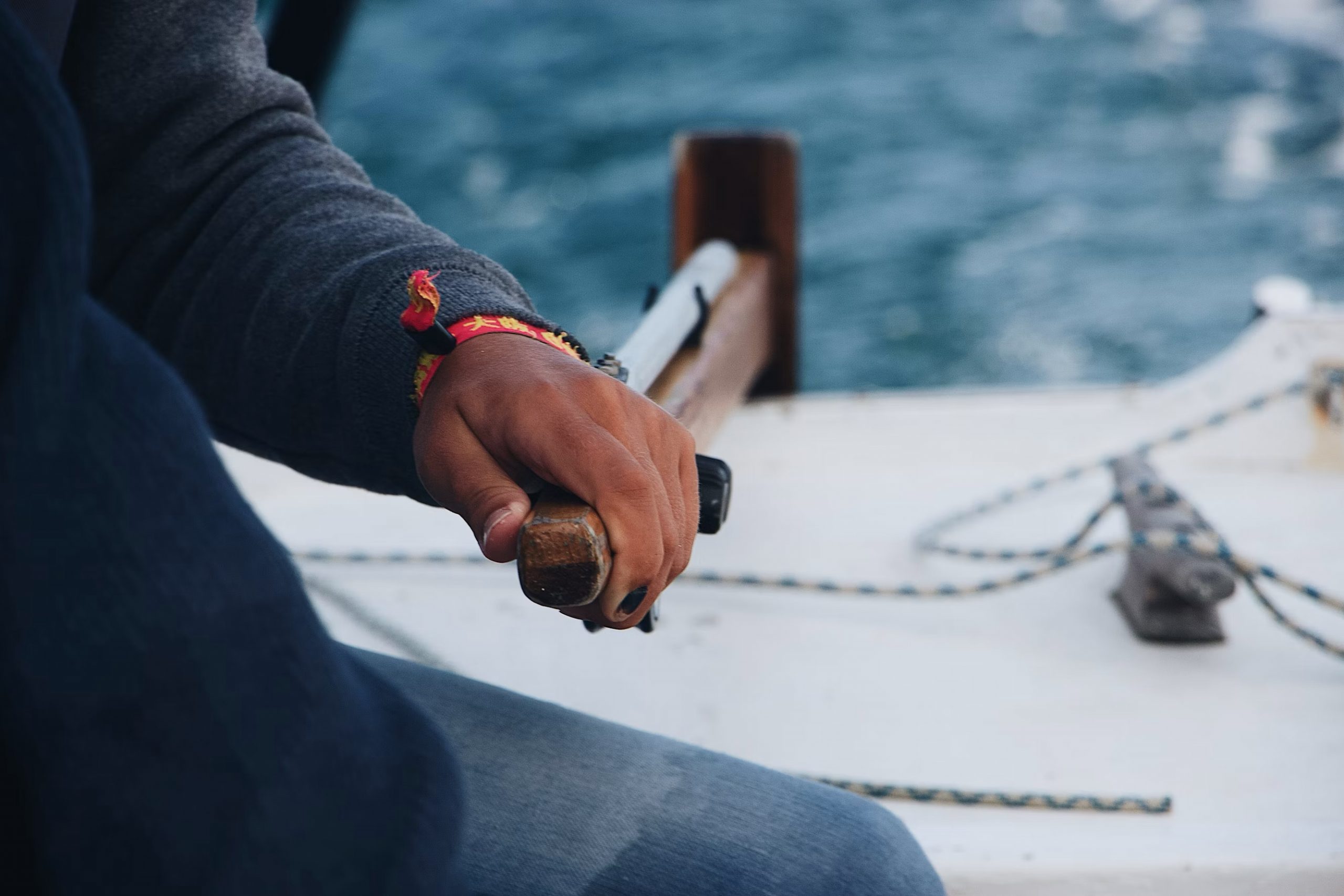
His hand remains on the helm.
His eyes remain open.
And the line is held.
Next Week: “The Wisdom of Shortening Sail”

The Unofficial Ambassador for the State of Texas