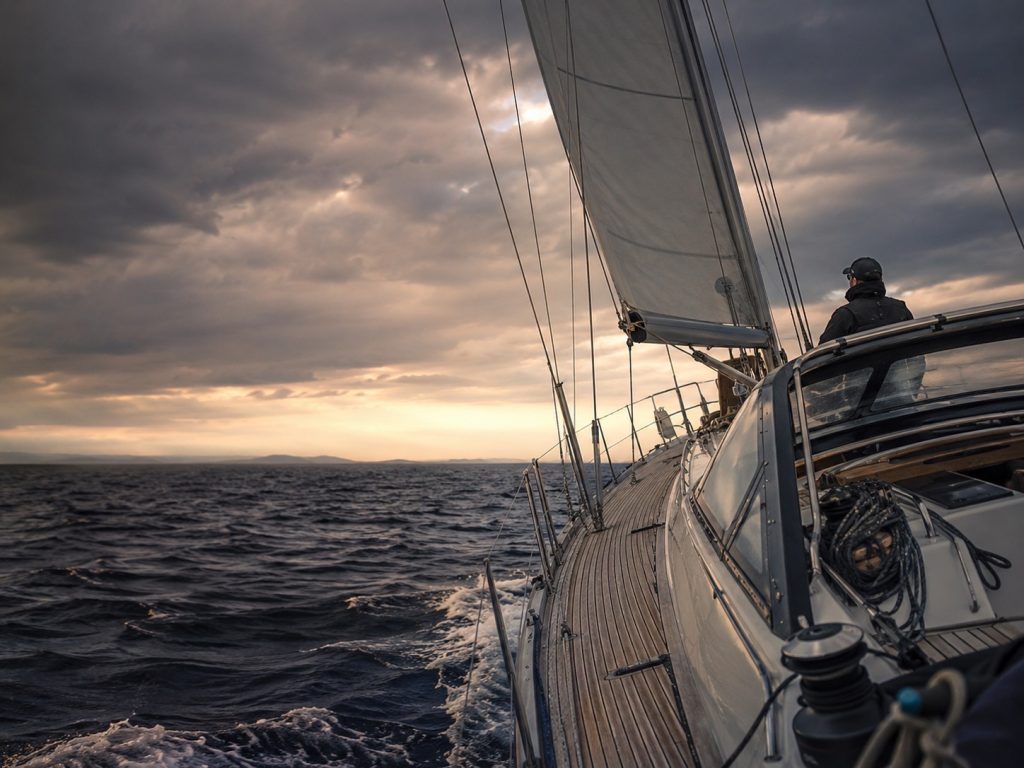
The Wind Is Not Yours to Command
The wind does not care where you intended to go.
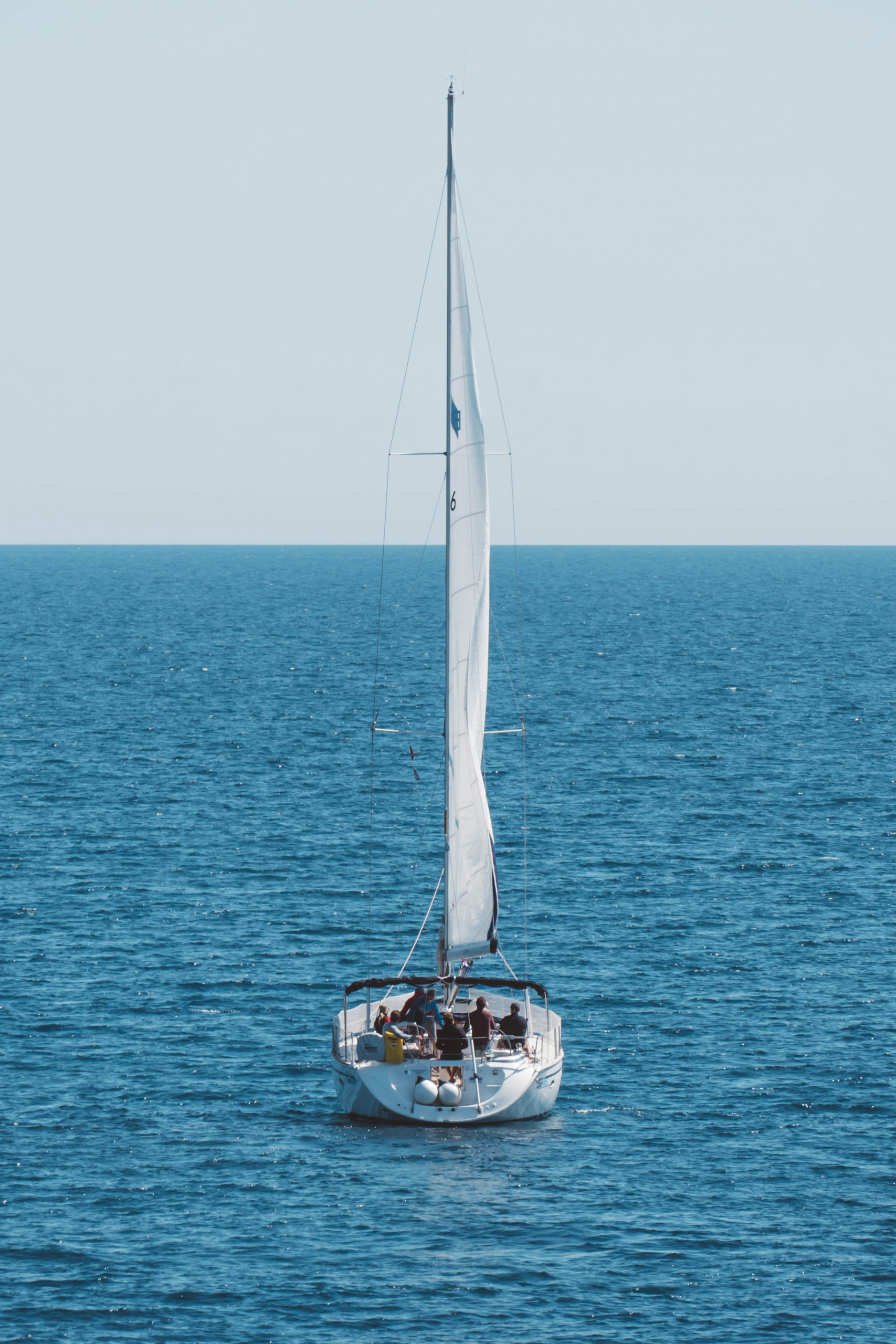
It does not consult your plan. It does not ask whether the timing is convenient, whether the course has been carefully plotted, whether the destination matters to you, or whether you feel prepared for what is coming. It arrives as it arrives. Sometimes gently. Sometimes with force. Sometimes from exactly the direction you hoped it would. Often from the one place that makes everything more difficult.
This is one of the first honest lessons the water teaches.
A man may stand at the helm with a clear course in mind. He may have studied the forecast, checked the lines, looked over the rigging, and imagined the clean geometry of the passage ahead. He may know where he means to go. He may even have every reason to believe the day will cooperate.
Then the wind shifts.
At that moment, intention becomes less important than response.
The boat tells the truth before the mind accepts it. The sail begins to luff. The hull loses its clean line through the water. The helm grows heavy in the hand. What seemed certain a few moments earlier now requires judgment.
The inexperienced sailor resents this. He takes the wind personally, as though the weather has chosen to oppose him. He tightens his jaw, forces the boat, fights the helm, and mistakes resistance for control. There is something recognizably human in that reaction. Most of us have done some version of it, not only on water, but in life.
We decide how things should go. We decide when success should arrive. We decide how others should behave, how opportunities should unfold, how our efforts should be rewarded, how our bodies should age, how our families should understand us, how the world should recognize what we have tried to build.
Then the wind shifts.
The promotion goes elsewhere. The relationship changes. The money tightens. The health report arrives. The market turns. The child grows into a person with a will of his own. The dream that once seemed close moves farther off. The reputation you thought you had is tested by people who were never going to understand it properly in the first place.
Life, like weather, does not ask permission.
This is where character begins to reveal itself.
Not in the plan, but in the adjustment.
A good sailor does not command the wind. He learns how to work with it. He trims the sail. He changes angle. He gives ground to gain movement. He comes to understand that forward progress is rarely a straight line. He does not confuse a changed route with a failed journey.
That distinction matters.
Some men mistake strength for the refusal to bend. They confuse rigidity with discipline. They learn to admire hardness, even when hardness costs them wisdom. They would rather hold a doomed course than admit that conditions have changed.
That is not command. That is vanity dressed as resolve.
True discipline is quieter. It has less need to announce itself. It sees clearly. It adapts without theatrics. It does not surrender its destination, but it accepts that the route belongs to reality.
The water rewards that kind of man.
On a sailboat, stubbornness has limits. You can wish for the wind to change. You can curse it. You can look at the horizon with all the disappointment in the world. None of that fills the sail correctly. None of it moves the boat with grace. None of it makes you more capable.
What matters is what you do next.
This is humility, though not the weak kind.
Humility is often misunderstood as smallness. It is not. Properly understood, humility is accuracy. It is the ability to see your place within a larger order of things. It is knowing what is yours to govern and what is not.
The wind is not yours.
Your response is.
That is a hard lesson for ambitious men. Ambition wants a clean bargain with the world: effort in, result out. Work hard enough, and the doors should open. Prepare properly, and the moment should arrive on schedule. Conduct yourself with discipline, and life should return the courtesy.
Sometimes it does.
Often it does not.
The mature person eventually learns that effort gives them standing, not sovereignty. Preparation matters. Excellence matters. Discipline matters. None of those exempt them from the weather.
The question is whether you can remain composed once the weather changes.
A man who cannot adapt is not strong. He is fragile in a polished form. His confidence depends on circumstances obeying him. His peace depends on favorable conditions. His identity depends on plans unfolding as imagined.
That is a dangerous way to live.
The stronger man builds something deeper. He develops the interior stability to meet changing conditions without losing himself. He may be disappointed, but he is not undone. He may alter course, but he does not abandon his standards. He may slow down, circle back, wait for a better angle, or take the longer way around.
He remains under command.
Not because he controls the wind.
Because he controls himself.
Once a man learns this, a certain burden falls away. He no longer needs everything to go as intended in order for it to go well. He can stop arguing with reality and begin working with it.
That does not mean becoming passive. A sailor who merely drifts has learned nothing. Adaptation is not the same as surrender. It requires attention, judgment, timing, and nerve. It requires the ability to act decisively without pretending to possess more power than you do.
This is where seamanship becomes something larger than technique.
To trim a sail properly is to make peace with forces beyond you without becoming their victim. To change tack is to admit that the direct path is unavailable and still insist on movement. To reef the sail when the wind rises is not fear. It is respect. It is the disciplined recognition that survival and progress require proportion.
A man needs that same proportion in his life.
There are seasons to press forward and seasons to reduce sail. There are moments to hold your line and moments to change angle. There are times when pride must be quieted so judgment can speak. There are times when the wisest thing a man can do is stop trying to overpower a force that was never his to overpower.
The wind will teach this eventually.
Age teaches it. Loss teaches it. Love, in its less sentimental moments, teaches it too.
So will any serious attempt to build something that matters.
The younger man often believes the point is to master the world. The older man, if he is fortunate, learns that the higher task is to master his response to it. Not coldly. Not without feeling. Not as a man emptied of desire or ambition, but as one no longer ruled by the illusion that desire alone can bend conditions.
The wind does not become less powerful because you are determined.
It becomes useful when you learn how to meet it.
That is the lesson.
Keep your destination. Know the harbor you are trying to reach. Prepare well. Study the sky. Respect the craft. Build the strength to endure difficult weather. Then, when the wind shifts, do not waste yourself in outrage.
Adjust.
There is dignity in that word. More than most men realize.
Adjustment is not defeat. It is intelligence under pressure. It is humility with motion still in it. It is the difference between the man who must be obeyed by circumstance and the man who can remain effective in the presence of it.
The water has little patience for fantasy. It strips away the decorative language men use about control. Out there, you either respond to what is real, or you pay for pretending otherwise.
The same is true on land.
A man’s life is not measured only by the course he sets, but by what he does when the course no longer holds. The plans will change. The wind will rise. The clean line to the horizon will disappear and return in another form. This is not evidence that the journey has failed.
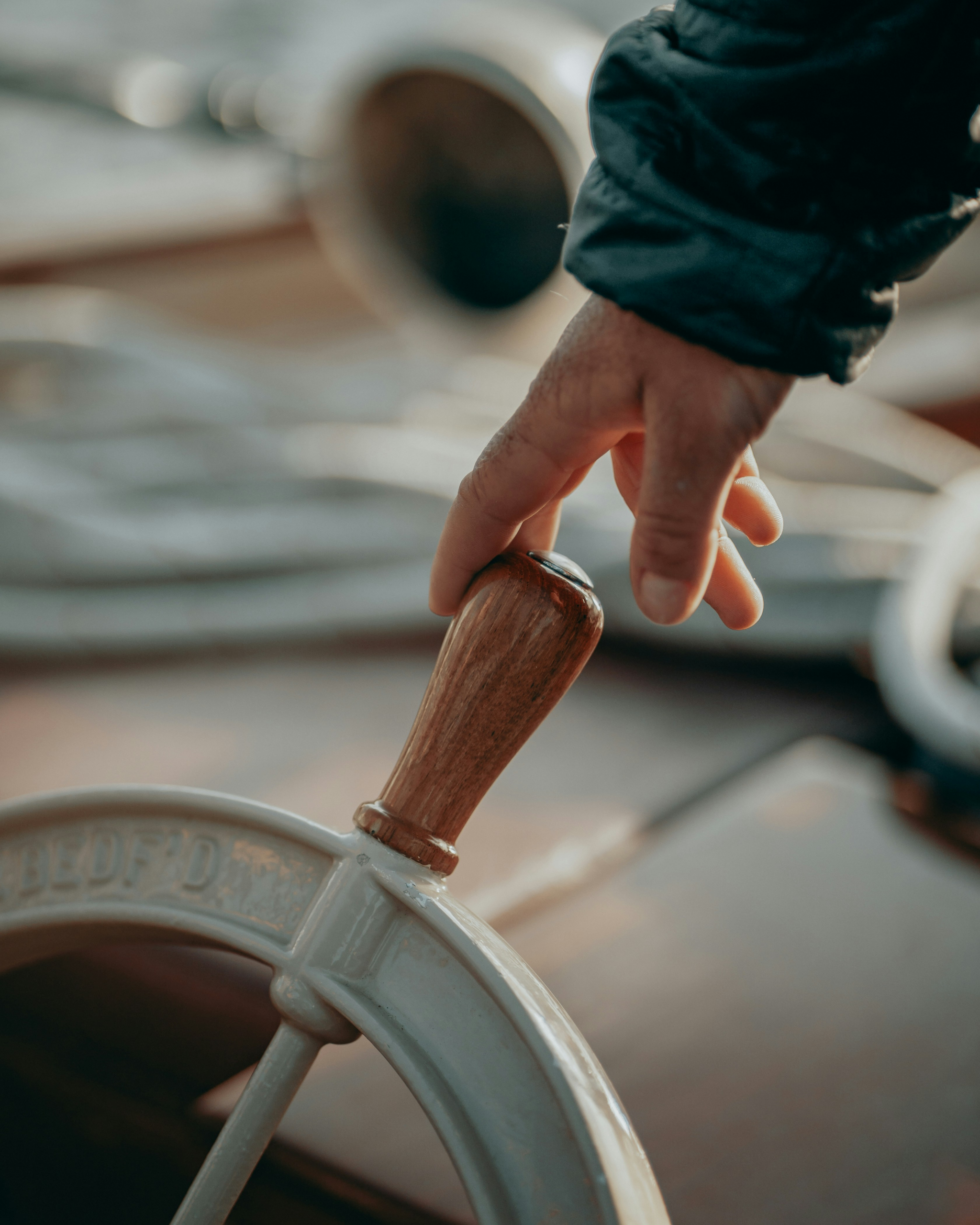
It is simply the journey becoming honest.
The wind is not yours to command.
The helm is.
Next week: When The Water Gets Rough

The Unofficial Ambassador for the State of Texas