Read the Weather Before It Reads You
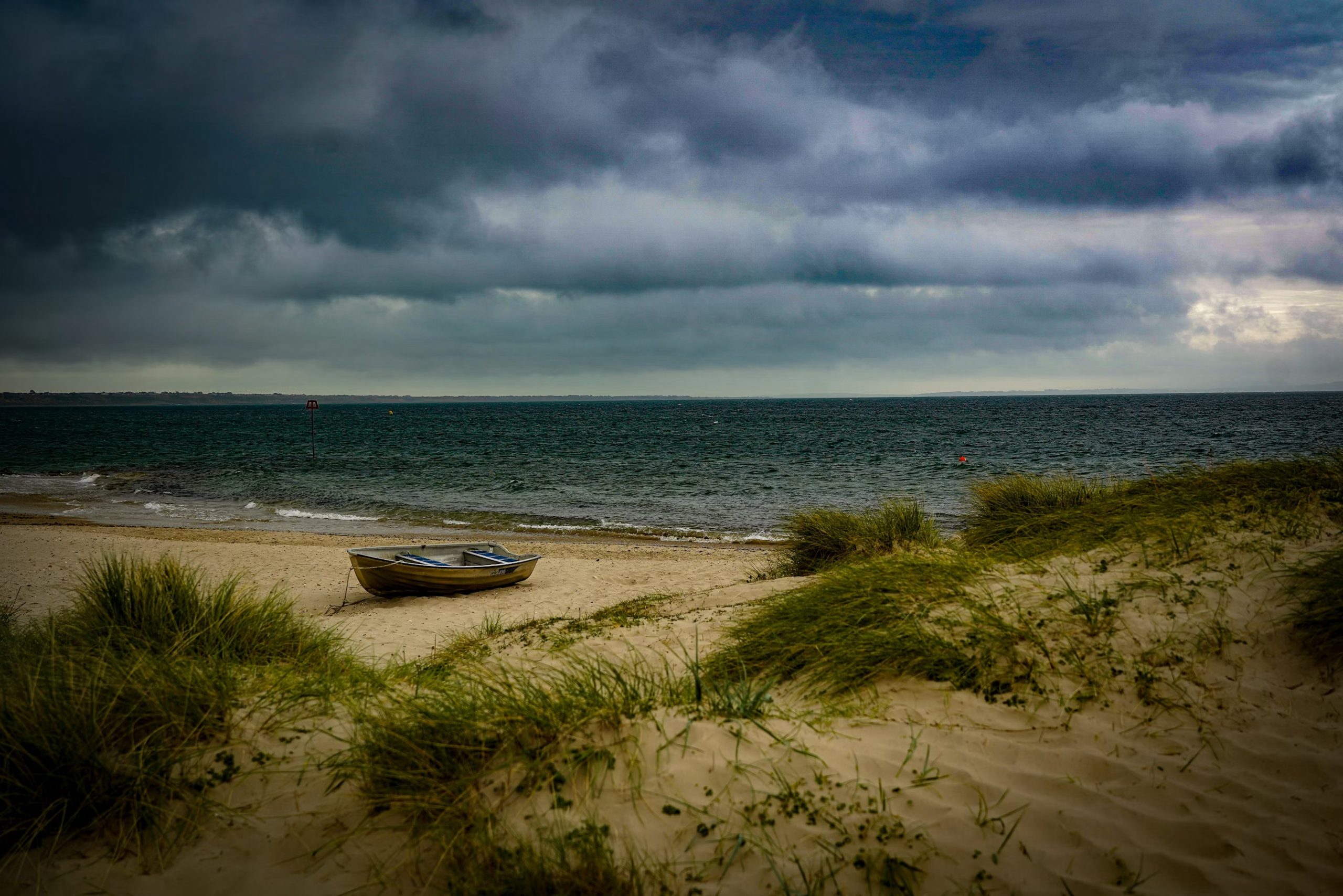
As any observant person who lives along the Florida coast can attest, storms rarely arrive as suddenly as men claim.
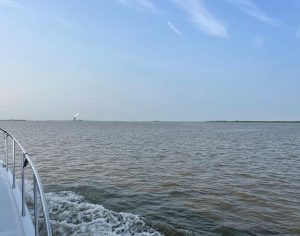
I learned that in a more memorable way in 2004, aboard a friend’s Beneteau 57. A couple of friends from Daytona and I were taking her from St. Augustine, Florida down to Stuart, staging the boat for an upcoming trip island hopping through the Bahamas. It was the sort of passage that can sound romantic in hindsight: a capable sailing yacht, Florida water, good company, and the promise of islands waiting somewhere beyond the horizon.
But the water has a way of stripping romance down to reality.
The sky had been lowering for some time. The wind had shifted before it strengthened. The clouds had changed their shape before the first hard gust arrived. The birds had gone quiet. The air had taken on that odd stillness that makes the world feel briefly held in place.
None of it announced itself with theatrical urgency. There was no trumpet blast from the heavens, no single cinematic moment when the day declared itself changed. The warning was there in smaller ways, in the kinds of details a man either learns to notice or later describes as sudden.
Sailors have always understood this. “Red sky at night, sailor’s delight. Red sky in morning, sailors take warning” may sound like old dockside rhyme, but it carries a serious truth. The sky speaks. The trained man listens. For some reason, we neglected to listen to the weather that day.
That is one of sailing’s first and finest lessons: the world speaks before it shouts.
A sailor learns to look outward before he looks inward. He studies the horizon, not as decoration, but as information. He notices the color of the sky, the behavior of the wind, the texture of the water, the angle of the light. He learns that conditions are never static. The day is always becoming something else.
This alone separates seamanship from mere recreation. A passenger experiences the moment. A sailor reads the moment.
That distinction also matters far beyond the boat.
Much of modern life encourages a person to live reactively. Messages arrive by mobile device, demands multiply, opinions gather, noise intrudes, and the day becomes a series of small
collisions. Men are praised for responding quickly, for being available, for remaining constantly engaged. Speed begins to masquerade as competence.
But speed is often the compensation for poor observation.
The man who reads the weather early does not need to panic later. He has already adjusted the sail, checked the line, altered the plan, shortened the distance, or turned toward shelter. To the untrained eye, those movements may look unremarkable. Nothing dramatic has happened yet. That is precisely the point. Good judgment often appears quiet because it prevents spectacle before spectacle has a chance to begin.
There is a form of leadership in this. Not the theatrical kind. Not the sort that needs declaration, applause, or visible command. The better kind. The kind that notices the change in a room before the argument begins. The kind that senses when a friendship is being neglected, when a business is drifting, when a body is being overused, when a household has lost its order, when a young man needs correction before he needs rescue.
To read the weather is to respect consequence.
The weak man waits until consequence becomes unavoidable, then calls his panic honesty. The careless man ignores early signs, then blames fate. The vain man assumes his intentions should protect him from conditions. The disciplined man watches.
He watches without fear. That is important. Awareness is not anxiety. A good sailor is not trembling at every cloud. He is simply awake to the world as it is. He has no need to dramatize risk because he has already granted risk its proper place. He knows the difference between caution and cowardice. He knows that preparation is not pessimism. He knows that ignoring a storm does not make him brave.
There is dignity in this kind of attention.
It is easy to admire boldness after danger has arrived. It is harder to admire the man who prevents danger from becoming the story. We live in an age that celebrates the rescue more than the discipline that would have made rescue unnecessary. Yet the older codes understood the difference. The well-run household, the well-maintained estate, the well-commanded ship, the well-governed life, all depend upon watchfulness before a crisis.
A gentleman, in the older and better sense of the word, was not simply a man with manners. He was a man with standards, obligations, and the self-command to notice what needed tending. He did not wait for disorder to become obvious. He understood that neglect first appears in small things.
A loose hinge.
An unanswered letter.
A neglected friendship.
A rising temper.
A body grown heavy and tired.
A mind fed too much noise.
A vessel taking on water by degrees.
By the time the damage becomes visible to everyone, the weather has already been speaking for quite some time.
This is why sailing remains such a useful teacher. It restores proportion. It reminds you that charm will not trim a sail, excuses will not calm water, and bravado will not change the wind. It gives feedback that is immediate enough to humble you and ancient enough to educate.
The lesson is not that one must become suspicious of life. It is that one must become observant enough to live it well.
The man who reads the weather learns patience. He learns to stand still without being idle. He learns to look before speaking. He learns that silence can be full of information. He learns that the most important thing in a given moment may not be what is loudest.
This is no small education.
Many men, myself included at times, move through life with their attention turned almost entirely toward themselves.Their mood, their ambition, their grievance, their appetite, their reflection in the glass. They miss the weather because they are busy admiring or defending the performance of being themselves. Then the storm arrives, and they are offended by its lack of deference.
The water cures that, if a man allows it.
Out there, you are not the center. You are a participant. The wind has its own mind. The current has its own force. The sky has its own intentions. The boat responds according to laws older than vanity. A man may still exercise command, but only by first accepting reality. This is the paradox at the heart of seamanship: control begins with submission to what is true.
A sailor does not defeat the weather by pretending it is not there. He learns it. He reads it. He respects it. He adapts early enough that adaptation still feels graceful.
There is a lesson here for anyone trying to build a serious life.
Read the room before you lose it.
Read the market before it punishes arrogance.
Read your household before distance becomes resentment.
Read your body before decline becomes diagnosis.
Read your habits before they become character.
Read your soul before it grows accustomed to lesser things.
None of this requires paranoia. It requires the old discipline of attention. The willingness to notice what is changing, what is weakening, what is gathering, what is being asked of you before the demand becomes severe.
A man does not need to control every condition. He does, however, need to stop pretending conditions do not exist.
The weather will always come. Some of it will be beautiful. Some of it will be difficult. Some of it will arrive despite every prudent measure. That is life. The goal is not to live untouched by storms. Such a life would be shallow, impossible, and ultimately unworthy of admiration.
The goal is to have been watching.
To have seen the shift early.
To have prepared without fuss.
To have known that a clear morning is not a permanent arrangement. To have understood that responsibility begins long before urgency.

On the water, this can be the difference between discomfort and danger. In life, it can be the difference between order and collapse.
The world still speaks before it shouts.
The civilized man learns to listen.
Next week, The Wind is Not Yours to Command.

The Unofficial Ambassador for the State of Texas