Texas doesn’t ease you into the day.
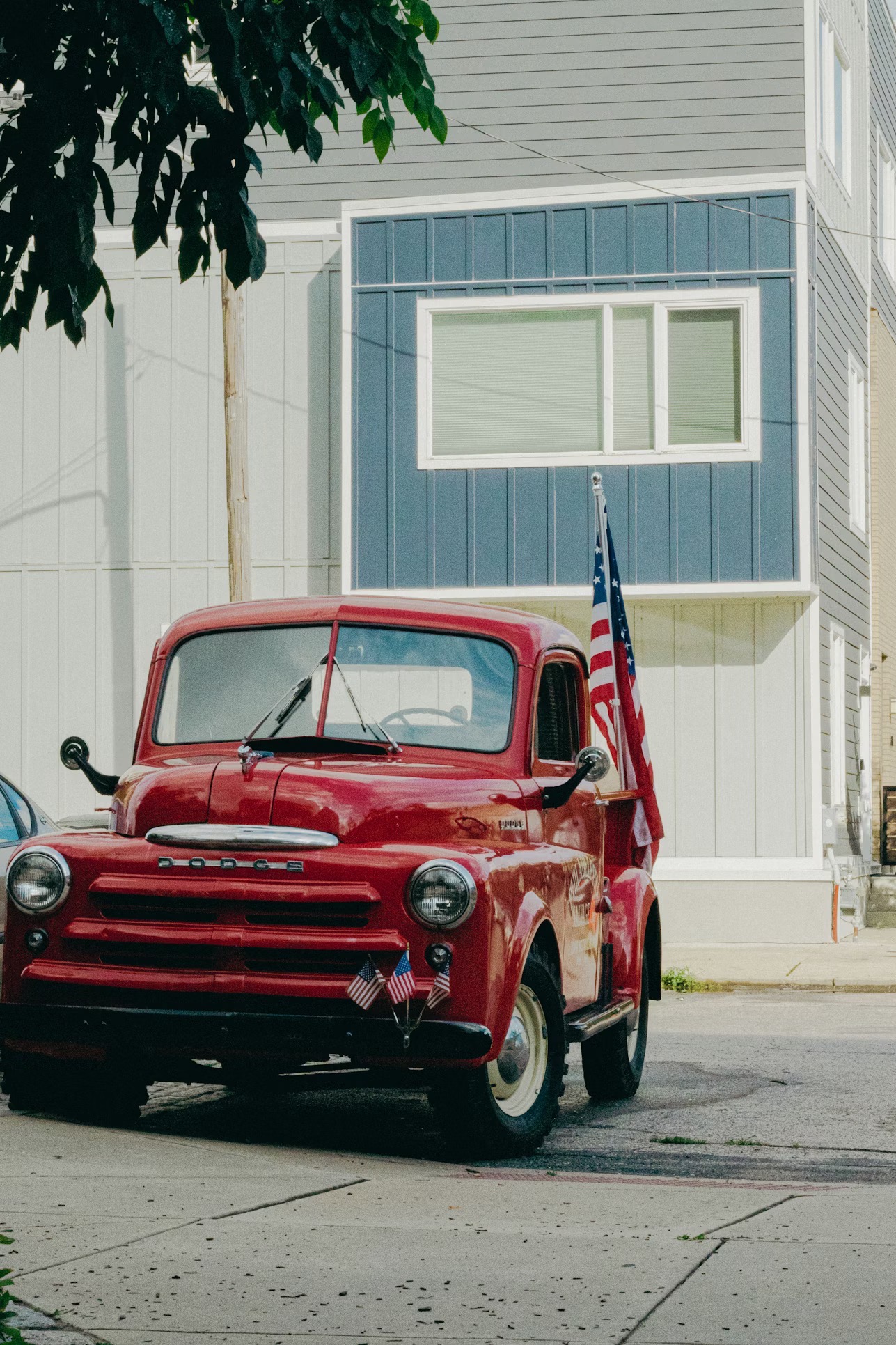
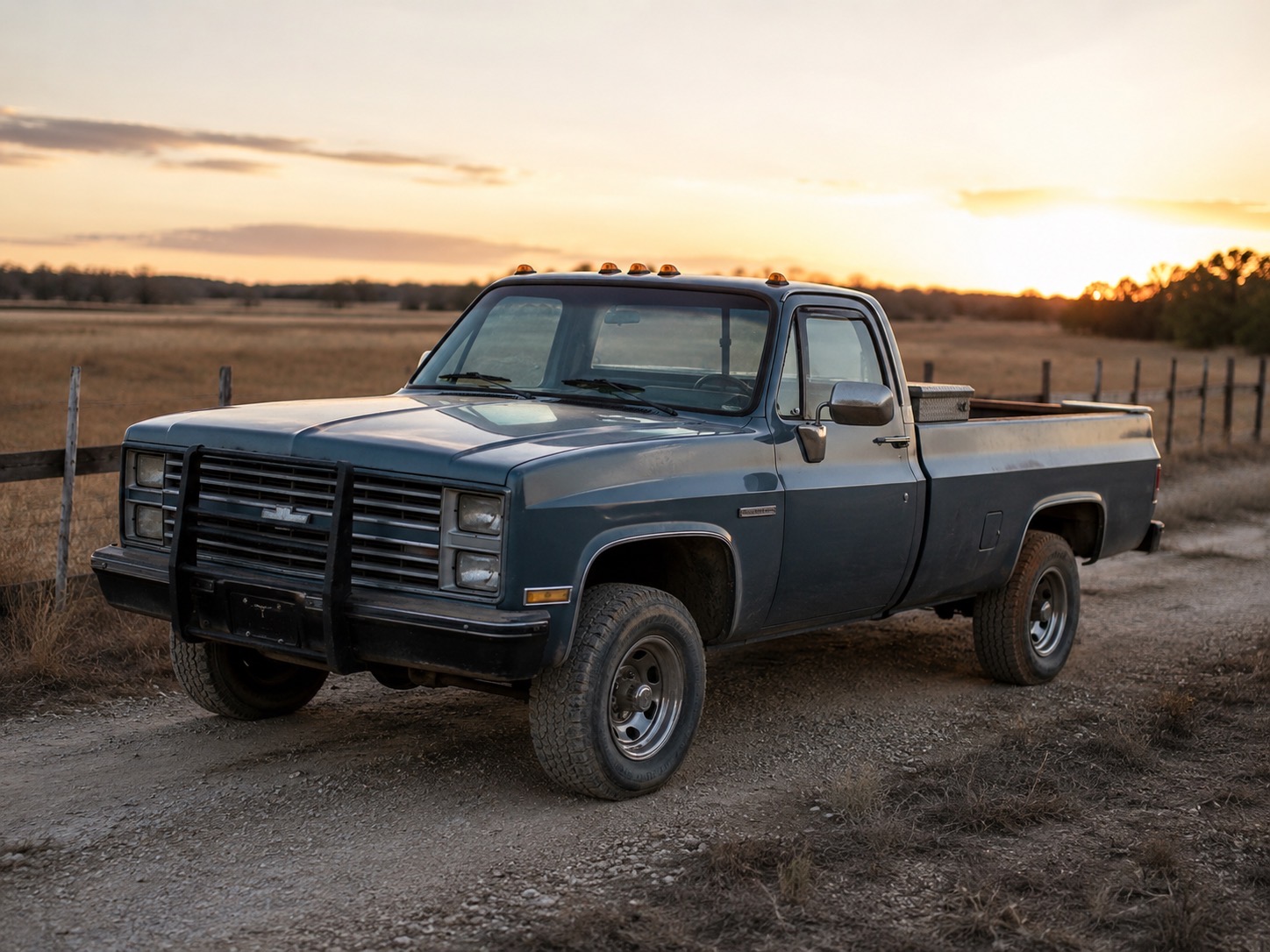
The sky is still deciding between navy and pale gold. The air carries that brief, honest coolness that disappears by eight. Your boots are already on. The coffee is already made. And parked just outside, exactly where it was left the night before, sits the American icon. The pickup truck.
Not gleaming. Not necessarily new. But present in the way that only certain things manage to be — steady, familiar, already running through your mind before the day has properly begun.
I have stood on the showfloors of Geneva. I have driven through the Scottish Highlands in vehicles engineered to an almost unreasonable standard of perfection. I have sat in the back of cars from Goodwood so refined they barely seemed to touch the road. All of it admirable. All of it is meaningful in its own context.
And yet there is something the American pickup truck does that none of those vehicles can replicate. It doesn’t transport you from place to place so much as it holds your life together while you move through it.
That distinction matters more than people might expect.
The Object Itself
Walk around a well-used truck and you are not reading a spec sheet. You are reading a biography.
The bed tells you what kind of work has been done. Scratches from cut lumber, the ghost outline of a tool chest, a stain that might be motor oil or river mud and was never entirely worth investigating. The tailgate, lowered a thousand times without ceremony, carries the small dents of things loaded quickly because daylight was short. The tires hold a layer of caliche dust that no amount of rain quite removes.
None of this is neglect. It is evidence.
There is a philosophy in this that I find genuinely compelling, and it connects directly to something my father used to say when we were on familial land deep inside the heart of the panhandle. He didn’t talk about trucks the way people in showrooms talk about trucks. He talked about what a truck could carry, where it would go, and how long it would last. Those were the only three questions that mattered. Everything else was ornament.
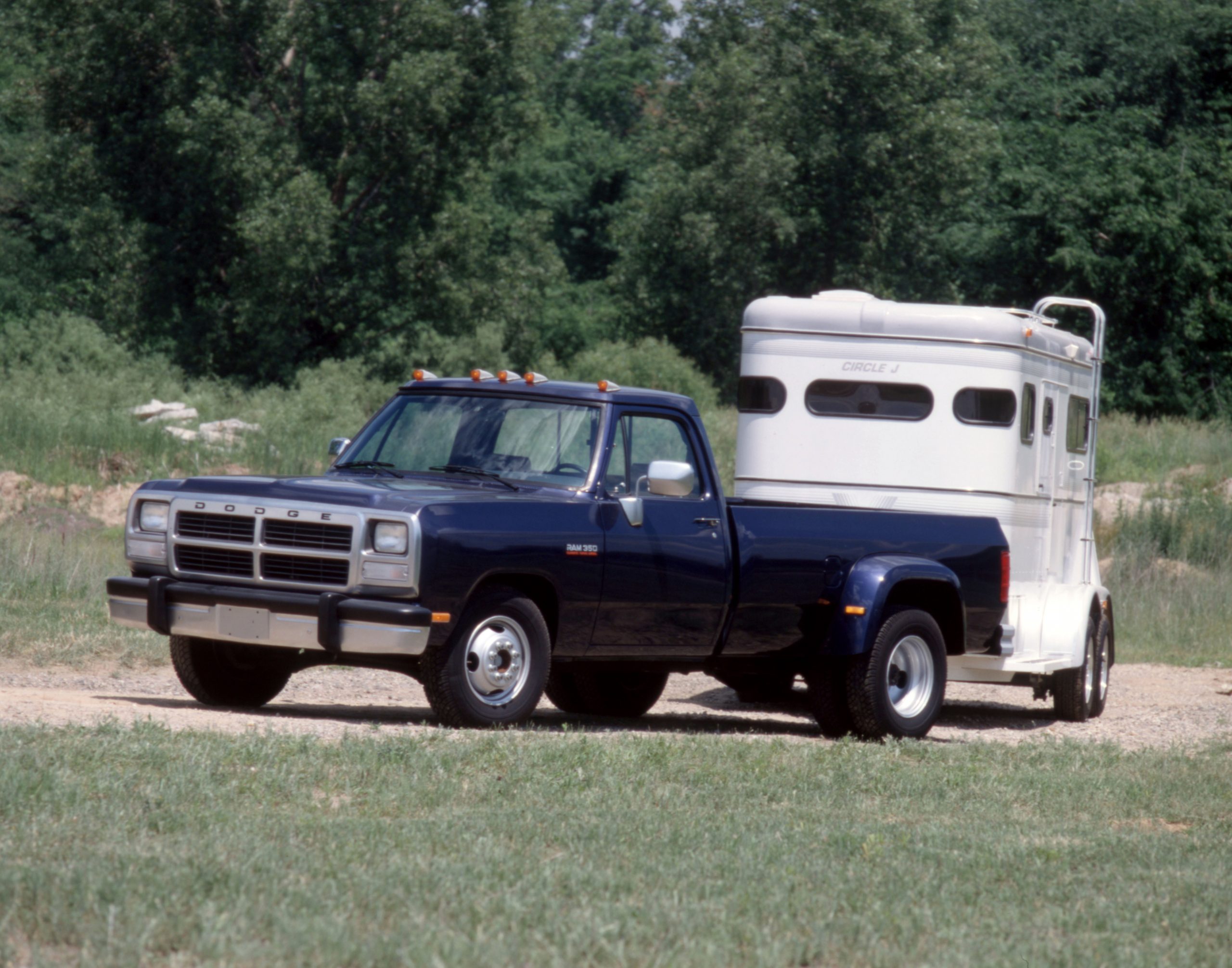
A well-chosen truck has a presence that reveals itself in proportion rather than drama. The stance is wide and intentional. The lines don’t chase fashion. The height above the road communicates something about the terrain it expects to encounter rather than the audience it hopes to impress. Whether it’s a well-worn F-250 with a rancher’s modifications, or a newer Tundra sitting on a caliche road outside a lease gate, the visual language is the same: this vehicle means to work, and it means to last.
That is its own form of beauty. Understated, load-bearing, honest.
Inside the Cab
Climb in and close the door. Notice that sound.
It is solid in a way that a sedan is not. Not loud, not performative — simply final. The door closes like a decision made, and that small acoustic detail sets the tone for everything that follows.
The cab of a working truck has its own atmosphere. There is usually a layer of lived-in detail that no interior designer would have planned and no owner would think to remove. A worn spot on the driver’s seat where a jacket has been folded and unfolded ten thousand times. A crease in the sun visor. A console that has held coffee cups, phone chargers, hunting licenses, and small change in roughly equal measure.
What you don’t often find, in a truck that has actually been used, is pretense.
Modern trucks have made significant concessions to comfort, and I don’t object to that. Heated seats in January on desolate wind-swept planes are not a luxury — they are a reasonable acknowledgment that ranching doesn’t pause for the weather. Navigation, connectivity, a capable sound system — these belong in any well-built vehicle. Craftsmanship should not be confused with austerity.
But the essential character of the cab remains unchanged from what it has always been: a working space that becomes, over the course of a long life, something closer to a study. You think in trucks. You plan in trucks. You process the day on the drive home before anyone else gets a word in. The cab holds those quiet hours as faithfully as any room in a house.
My best thinking has always happened somewhere between the front gate and the highway, with the windows half-down and the radio left alone.
On the Road
There is a particular kind of driving that only a truck makes possible.
It is not about performance in the traditional sense. A well-sorted sports car will always be more surgical through a corner. A luxury touring sedan will always isolate the road with greater sophistication. These are facts, and I hold them without apology — I drive both often, and I appreciate them for what they are.
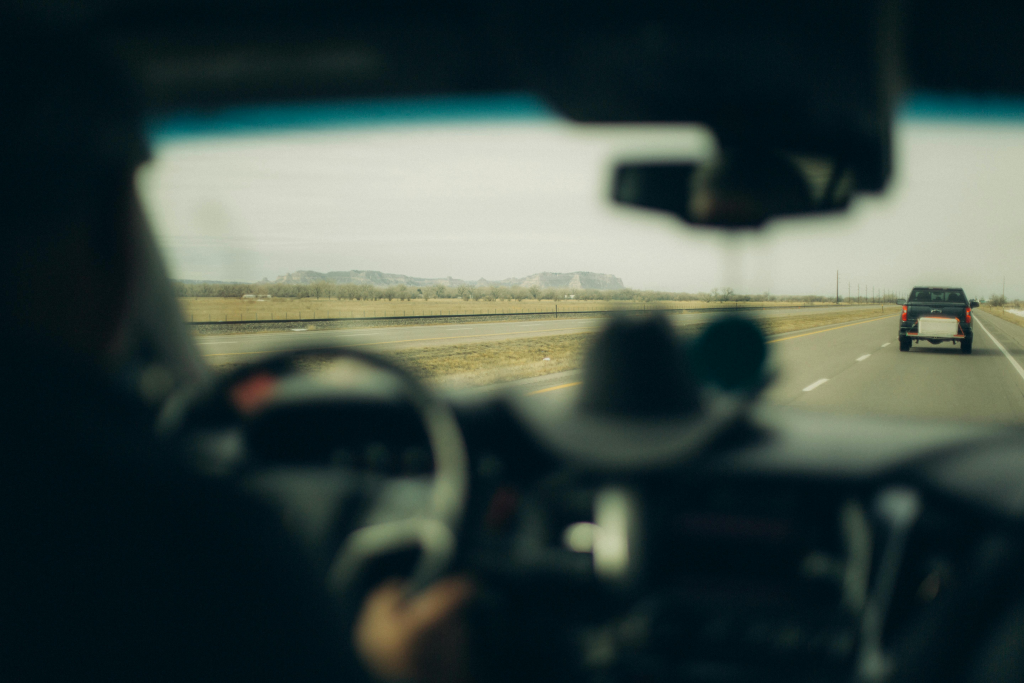
But driving a truck on a long stretch of highway, with the bed loaded or empty depending on the day’s requirements, belongs to a different register entirely. The elevation gives you distance. The mass beneath you gives you a sense of consequence. You are not skimming the surface of the land — you are moving through it with weight and intention.
There are roads in West Texas where the horizon is so vast it stops being a visual fact and becomes something more like a philosophical condition. On those roads, in a truck, something quiet happens to a person. The distance doesn’t feel threatening. It feels proportionate. As though the landscape and the vehicle have reached a private understanding, and you are simply along for the duration.
That is not something you can engineer into a vehicle. It has to be earned, mile by mile, over years of use and territory.
Handling, in this context, is best understood as competence rather than excitement. A truck that responds reliably when loaded, that holds its line in rain, that manages rough terrain without drama — this is the standard that matters. Not the quarter mile. Not the track time. The question is always: does it do what you need it to do, in the conditions you actually face?
The answer, for a well-chosen truck properly maintained, is consistently yes. And there is a quiet satisfaction in that consistency that I find more enduring than any single moment of performance.
The Inheritance
Here is where I want to be precise, because this is the part most often misunderstood.
The pickup truck in America has become, in some corners, a fashion accessory. Chrome packages, lift kits sized more for attention than function, interiors priced and trimmed for the school pickup line. I recognize this version of the truck. I don’t dismiss the people who choose it. I too fawn over the new Longhorns from Ram. Taste takes many forms, and the landscape of truck culture is genuinely wide.
But there is another version, less photographed and more quietly persistent, that carries the actual weight of this tradition.
It is the truck that has passed from father to son not because it was the newest option available, but because it already knew the roads. The truck that carries a grandmother’s voice in the creak of its seat, a grandfather’s logic in the modifications made to the bed, a father’s discipline in the way the oil was changed on schedule, every season, without complaint. These are not sentimental details. They are the record of a life organized around care and continuity.
I think about my own father and his time on the land. He drove trucks the way certain men wear watches — not to signal anything to the room, but because the object was right for life. His truck was only twice the newest model. It was, however, always the right one. Serviced, respected, understood. When something broke, he fixed it. Or most likely, he taught me how. When something wore out, he replaced it precisely, not extravagantly.
That philosophy transfers. The son who inherits a truck like that doesn’t inherit a machine — he inherits an education. He learns what it means to maintain something across time. To resist the cultural pressure that tells him replacement is easier than stewardship. To understand that the most capable objects in a life are rarely the newest ones.
These are lessons that don’t appear in any manual. I wish they did. They arrive through miles and seasons and the particular silence of a long drive with someone who doesn’t need to explain everything to you.
What Endures
I have driven a great many things. I will drive a great many more.
The vehicles that stay with me are not always the most refined. They are the ones that carried something beyond their own engineering. A Range Rover on a particular road in the Highlands. A vintage Porsche Speedster on a quiet Sunday on the Tail of the Dragon. And more than once, a truck on a caliche farm-to-market road at first light, with the land still cold and the day not yet spoken for.
The American pickup truck endures because it occupies a category that technology alone cannot fill. It belongs to work, to land, to memory, and to the unhurried discipline of a life built rather than purchased. It does not announce itself. It does not require a particular audience. It is simply there, parked outside, already part of the day before the day has begun.
In that presence — quiet, capable, marked by use — there is something worth understanding about a certain way of living. Not nostalgic. Not performative. Simply grounded in the belief that what is built well, maintained with honesty, and passed forward with intention does not need to be replaced to remain relevant.
It simply needs to continue.
And on the best mornings, when the sky is still deciding and the coffee is still warm, that is exactly what it does.

The Unofficial Ambassador for the State of Texas