A Confident Step Into the Near-Luxury Conversation
Less than six months ago, I spent time with the first model year of the newly redesigned Nissan Murano—a vehicle that marked a clear break from what the Murano had been for nearly two decades. It introduced a new design language, a thoroughly modernized interior, and, more importantly, a shift in philosophy. The Murano was no longer content to sit comfortably in the middle of the segment; it was aiming higher.
Returning now in the 2026 Nissan Murano Platinum AWD, the expectation is different. This is no longer about first impressions or redesign headlines. The question is whether that new foundation holds up with familiarity—whether the refinement, the technology, and the reworked powertrain continue to deliver when the novelty has worn off.
After a week navigating the same mix of Houston traffic and the quieter roads around The Woodlands, the answer is clear. The changes introduced last year were not just surface-level updates. They reshaped the Murano into something more complete—more composed, more considered, and more aligned with where this segment is heading.
Exterior
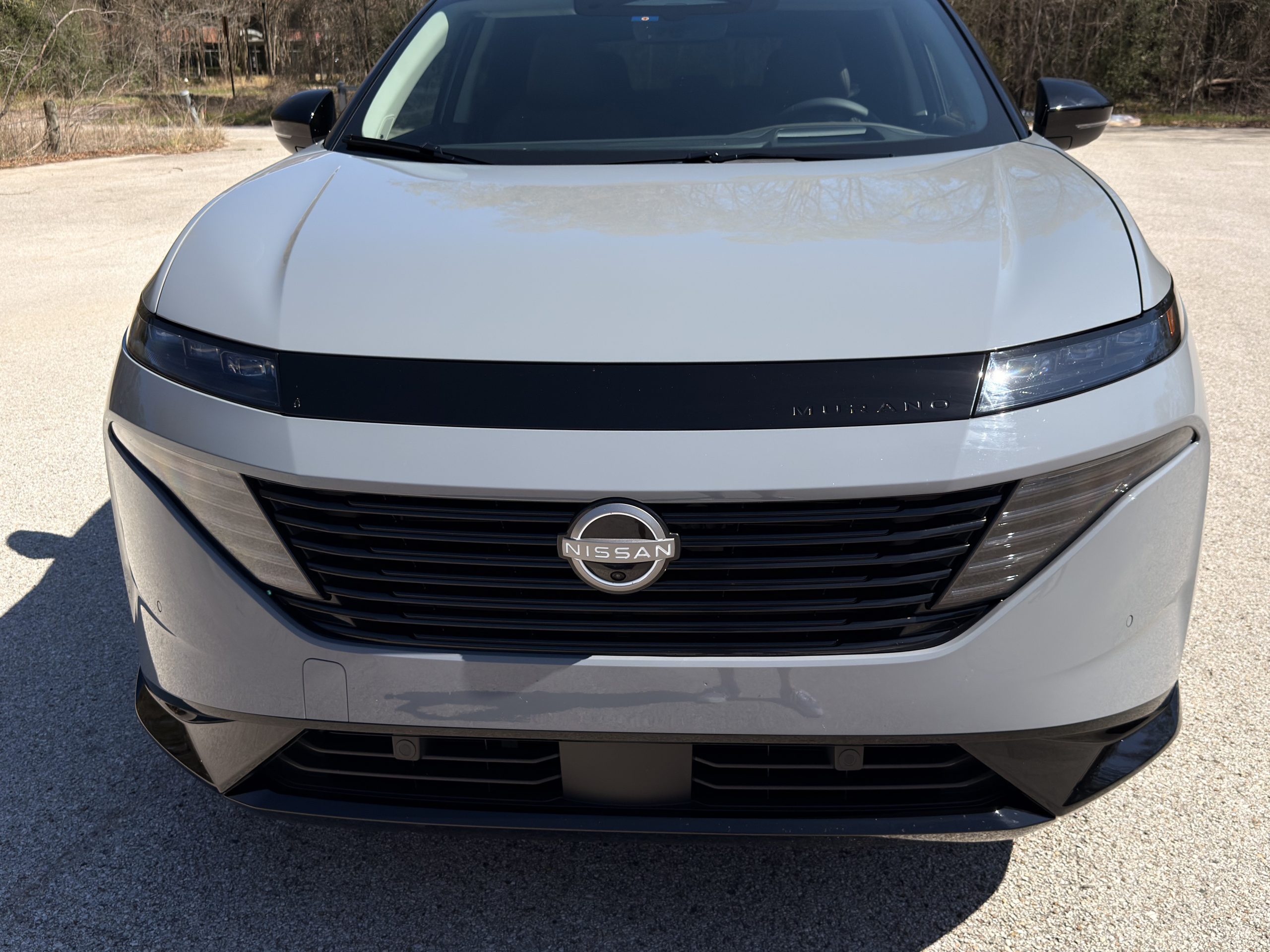
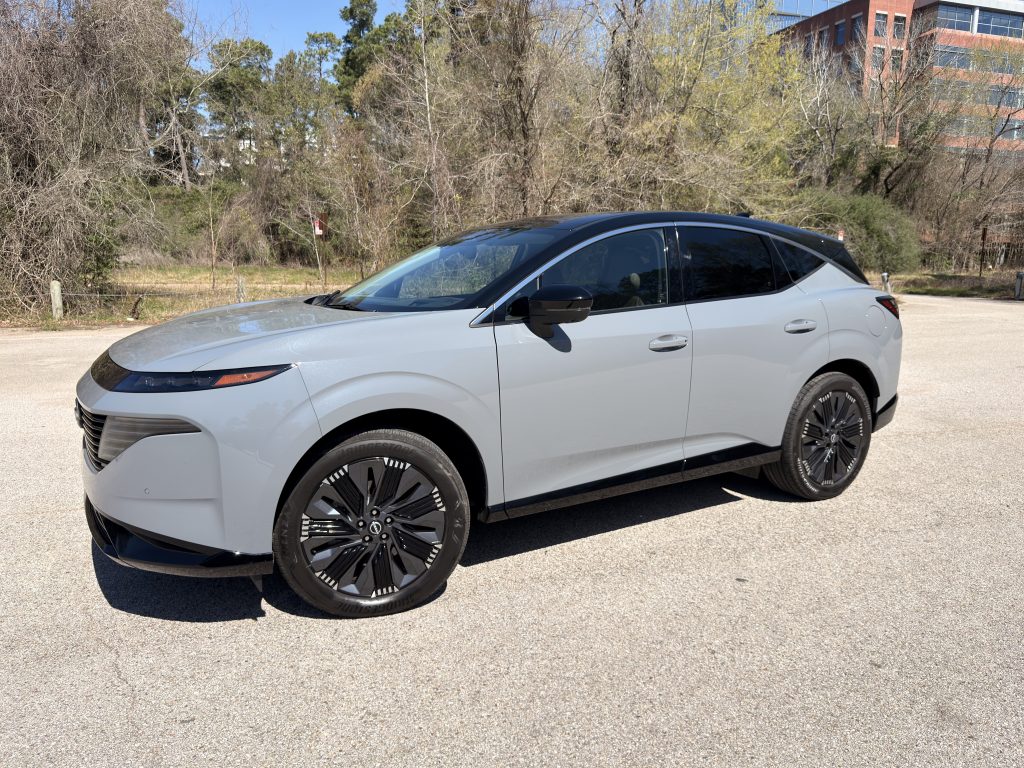
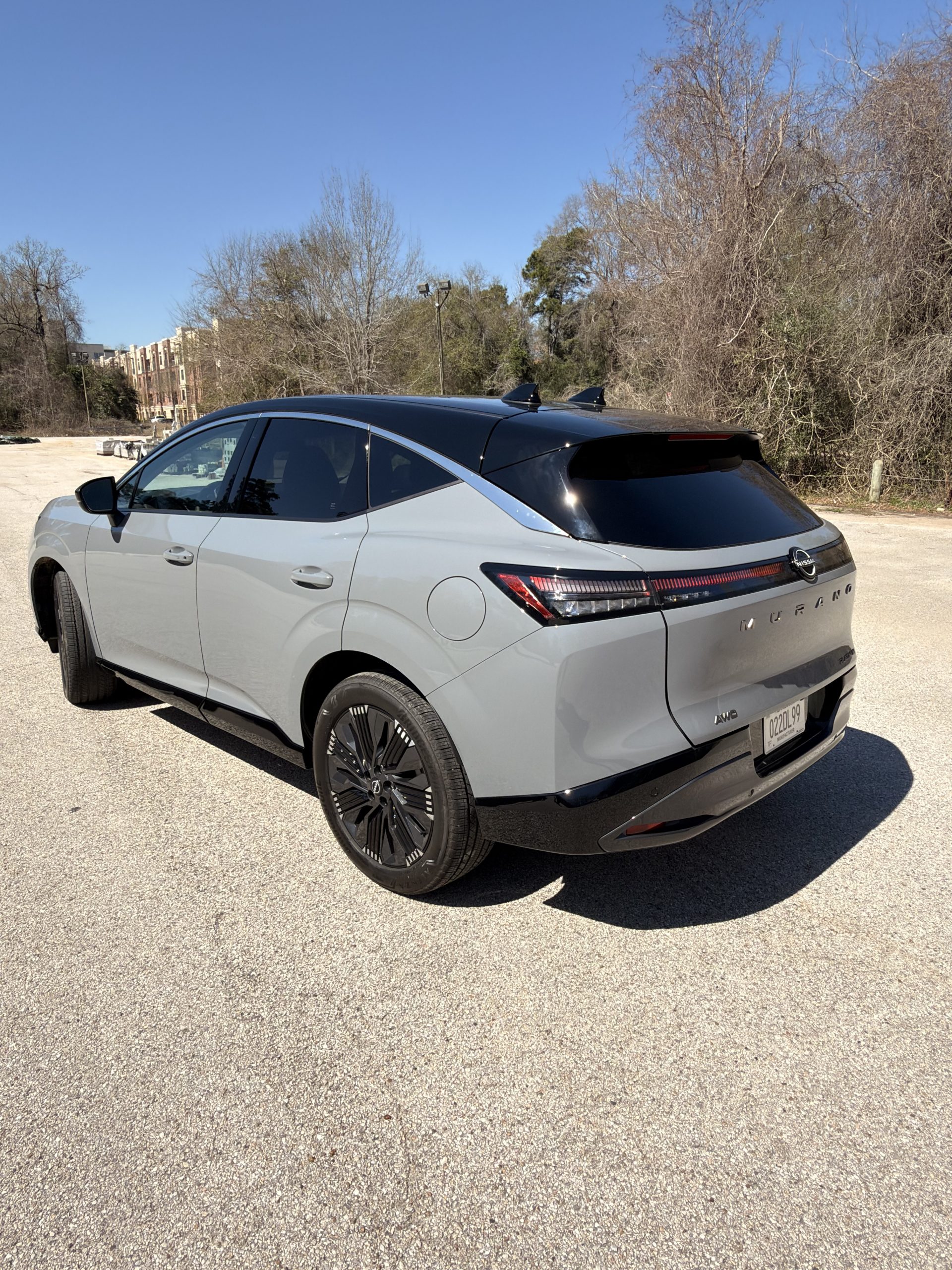
The design language of the 4th generation of Murano marks a clear departure from the past, leaning heavily into the influence of the Nissan Ariya. The familiar floating-roof motif has been retired in favor of something cleaner, more architectural, and decidedly more modern.
In a two-tone gray and black configuration, the Murano presents itself with quiet confidence. There is restraint here—no unnecessary aggression, no attempt to mimic the off-road aesthetic that has become so prevalent in the segment. Instead, the focus is on proportion, surface, and presence.
At just under 193 inches in length and roughly 78 inches in width, the Murano occupies its space well. It feels substantial without being oversized, a balance that becomes particularly valuable in tighter urban environments. The stance is grounded, helped in no small part by the 21-inch machine-finished wheels exclusive to the Platinum trim. They fill the arches with intention, giving the vehicle a planted, finished look.
The front fascia is where the transformation is most apparent. Nissan’s V-Motion design has been reinterpreted into a more integrated, horizontal expression, with LED lighting elements that blend seamlessly into the bodywork. It’s a cleaner execution—one that feels aligned with where design is heading rather than where it has been.
What stands out most is that the Murano no longer feels like it’s trying to differentiate itself through styling alone. It simply looks resolved.
Interior
If the exterior signals change, the interior confirms it.
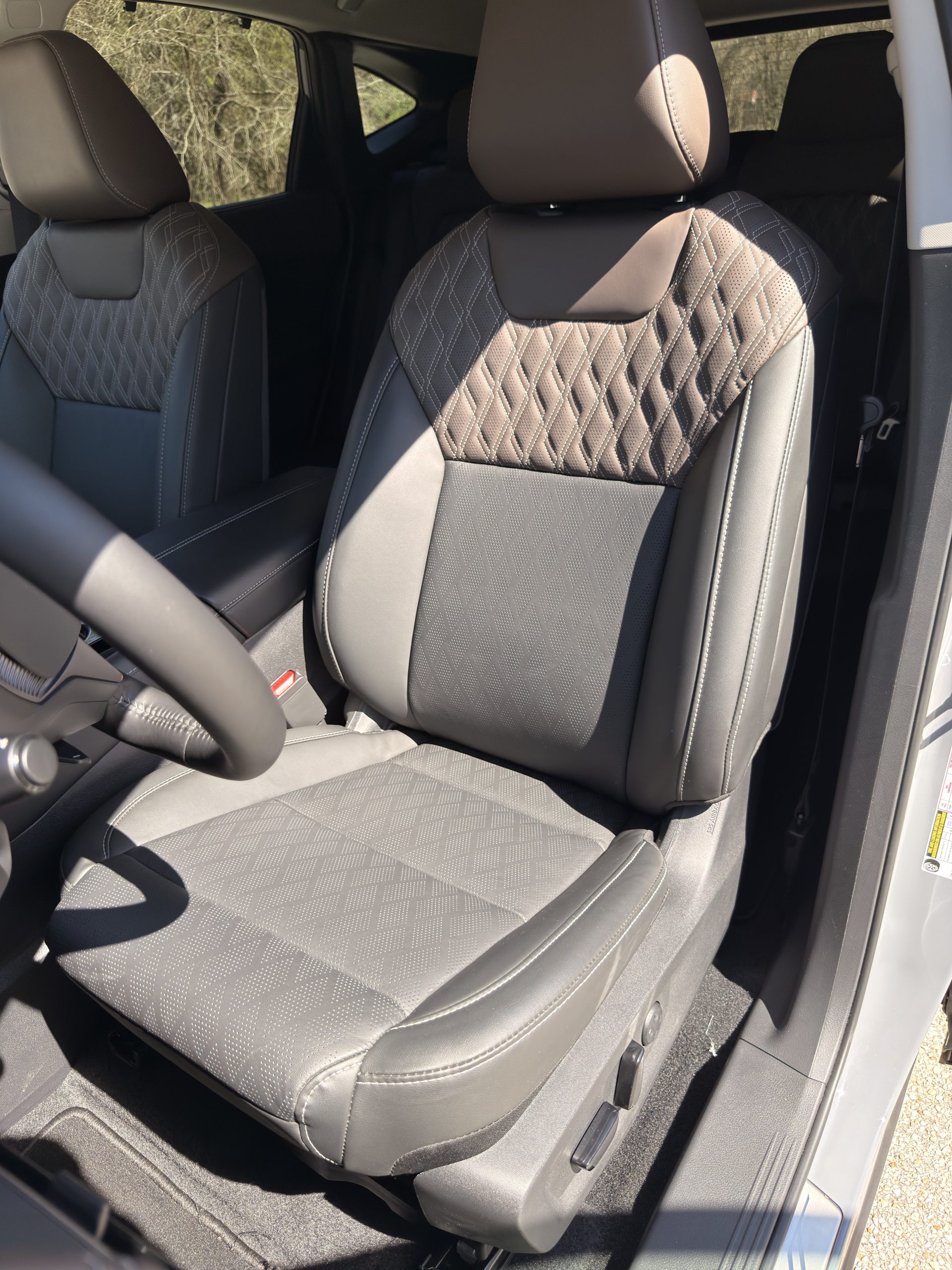
The Platinum trim introduces a cabin that comfortably crosses into near-luxury territory. Quilted semi-aniline leather, a thoughtful mix of textures, and a cohesive layout give the space a sense of intentional design rather than feature accumulation.
The dual 12.3-inch displays form the centerpiece of the dashboard. One serves as a fully digital instrument cluster, while the other manages infotainment duties with Google built-in functionality. Navigation, voice commands, and app integration all operate with a level of intuitiveness that has not always been a given in this segment. It works in a way that feels immediate and familiar.
Seating remains a hallmark. Nissan’s Zero Gravity seats continue to deliver long-distance comfort, and in the Platinum, they are both ventilated and equipped with a massage function. In the context of a Texas summer, these are not indulgences—they are necessities. They transform stop-and-go traffic from something endured into something managed.
Rear passengers are equally well considered. Legroom sits at 36.3 inches, with ample headroom to accommodate adult occupants comfortably. Heated outboard seats add another layer of refinement, reinforcing the Murano’s role as a vehicle designed for everyday usability rather than occasional accommodation.
Cargo capacity remains practical, offering 32.9 cubic feet behind the rear seats and expanding to 63.5 cubic feet with them folded. It’s a configuration that supports both routine errands and longer trips without compromise.
One detail worth highlighting—because it speaks to thoughtful design—is the raised magnetic wireless charging pad. Positioned to hold a phone securely, it avoids the common pitfalls of flat charging surfaces: sliding devices, overheating, and awkward placement. It is a small feature, executed exceptionally well, and indicative of a broader attention to how the vehicle is actually used.
Driving
The powertrain too carries over from the previous model year.
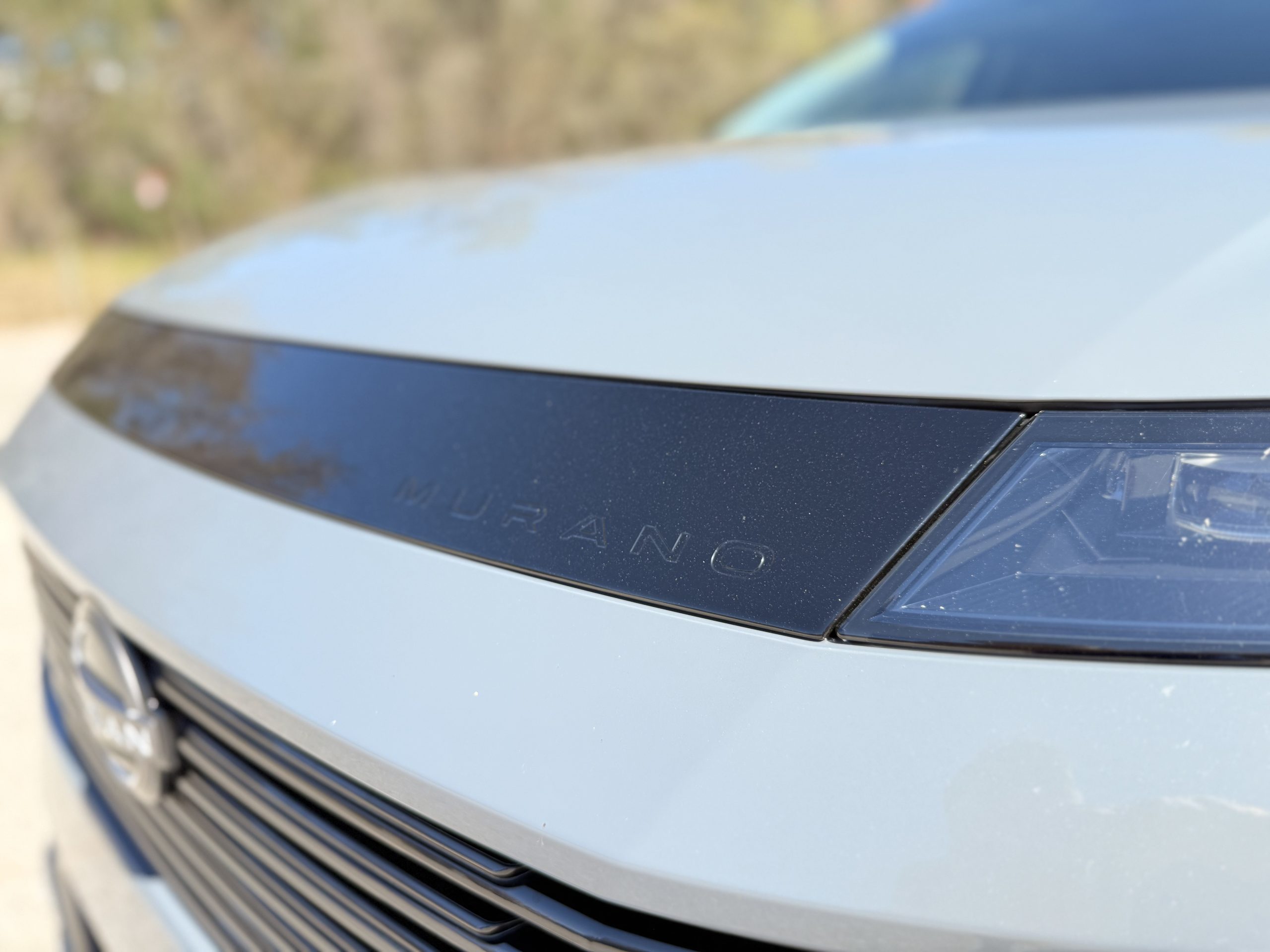
Under the hood, the Nissan Murano continues with the 2.0-liter VC-Turbo four-cylinder, producing 241 horsepower and 260 lb-ft of torque, paired to a 9-speed automatic transmission. This combination replaced the outgoing V6 and CVT with the 2025 redesign, and it remains the defining mechanical characteristic of the current Murano.
In daily driving, the setup feels well-matched to the vehicle’s purpose. The torque comes in low, making acceleration from a stop and movement through city traffic feel more responsive than the previous generation ever managed. It doesn’t rush, but it no longer hesitates either.
The 9-speed automatic continues to be a quiet highlight. Shifts are smooth and unobtrusive, giving the Murano a more natural rhythm on the road. There’s none of the droning or disconnected feel that once defined the driving experience. Instead, it behaves in a way that feels intuitive—predictable in the best sense.
This is not a performance SUV, and it doesn’t pretend to be. Acceleration is measured, passing requires a bit of planning, and the overall character leans toward composure rather than urgency. What it delivers instead is consistency.
Ride quality remains one of the Murano’s strongest attributes. It absorbs rough pavement with ease, even on the larger 21-inch wheels, and maintains a level of cabin isolation that stands out in this segment. Wind and road noise are kept in check, allowing for easy conversation at highway speeds.
Through Houston traffic and longer highway stretches, the Murano settles into a steady, unbothered rhythm. It’s easy to place, easy to manage, and rarely asks anything of the driver beyond basic input. Visibility is good, the steering is light without feeling disconnected, and the overall experience is one of quiet competence.
Fuel economy remains in the expected range at around 21 mpg city and 27 mpg highway. It’s adequate, though not a standout. A hybrid option would still elevate the package, particularly for buyers looking to maximize efficiency without sacrificing the Murano’s core strengths.
As it stands, the driving experience is cohesive and well-resolved. It doesn’t chase excitement. It prioritizes comfort, predictability, and refinement—and it delivers on all three.
Technology and Safety
The Platinum trim comes equipped with ProPilot Assist 2.1, Nissan’s latest iteration of its hands-free driver assistance system.
On compatible highways, the system allows for hands-free operation, managing steering, acceleration, and braking with a level of confidence that feels natural rather than tentative. It handles curves smoothly and integrates navigation data to anticipate changes in speed, particularly around interchanges.
In practice, it becomes most valuable on longer drives, where it reduces the constant input required from the driver without removing engagement entirely. It is a subtle enhancement, but one that contributes meaningfully to overall comfort.
The broader suite of safety features includes adaptive cruise control, blind-spot monitoring, rear cross-traffic alert, and a surround-view camera system. The available “invisible hood” view adds
an extra layer of visibility in tighter spaces, reinforcing the Murano’s ease of use in everyday scenarios.
Technology here does not overwhelm. It supports.
Summary
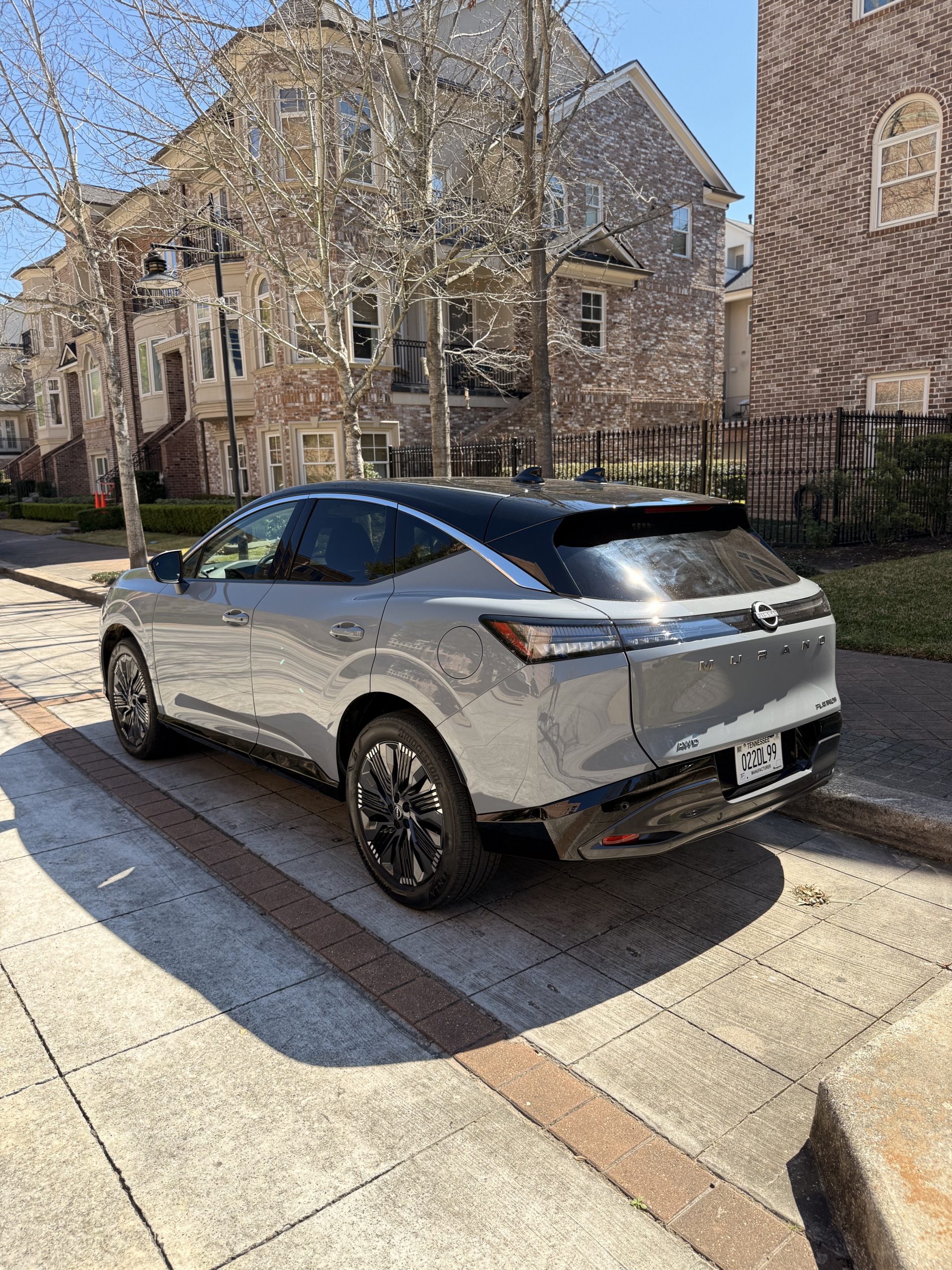
The 2026 Nissan Murano Platinum AWD starts at $49,800, with a well-equipped example reaching $57,585.
What that price now represents is a shift in positioning.
The Murano is no longer defined by what it used to be. It has moved forward—mechanically, technologically, and in terms of overall refinement. The transition to the VC-Turbo engine and 9-speed automatic addresses the most persistent criticisms of the previous generation, while the redesigned interior and exterior bring it in line with contemporary expectations.
There are still areas for growth. A hybrid powertrain would strengthen its efficiency credentials and broaden its appeal. But as it stands, the Murano delivers a composed, well-executed driving experience paired with a cabin that consistently feels a step above its segment.
It does not attempt to be everything. It focuses on what matters: comfort, usability, and a sense of quiet refinement.
In doing so, the 2026 Murano continues to do something the previous generation could not. It feels current.

The Unofficial Ambassador for the State of Texas